


Diversity and inclusion training has become a workplace staple, but let’s be honest: most of it falls flat. You’ve probably sat through those mandatory sessions where everyone checks their phones while someone clicks through slides about unconscious bias. The real challenge isn’t understanding why D&I matters—it’s creating programs that actually change hearts, minds, and behaviors.
The difference between effective and ineffective diversity and inclusion training often comes down to design. When training feels like a checkbox exercise, it becomes one. But when it’s built around engaging experiences that connect with people’s real-world challenges, it can spark genuine understanding and lasting change.
This guide will walk you through the essential elements of creating D&I training that works—from understanding what makes people actually pay attention to designing experiences that stick long after the session ends.
Why Most Diversity Training Misses the Mark
Traditional diversity training often fails because it treats complex social dynamics like technical procedures. You can’t PowerPoint your way to empathy, and you definitely can’t lecture people into being more inclusive. Research consistently shows that many traditional diversity training programs are ineffective because they oversimplify complex social issues, often using generic, lecture-based formats that do not produce lasting behavioral changes. The most common mistakes include:
- Passive consumption: Sitting through presentations about bias without opportunities for reflection or practice
- One-size-fits-all content: Generic scenarios that don’t reflect your organization’s actual challenges
- Defensive positioning: Framing D&I as compliance rather than competitive advantage
- Lack of follow-through: Single sessions with no ongoing reinforcement or skill-building
The result? Participants walk away feeling either lectured at or confused about how to apply what they’ve learned. Some may even become more resistant to D&I initiatives, viewing them as performative rather than meaningful. Studies show that mandatory or compliance-focused trainings can trigger resistance or backlash, and tend not to increase diversity in management roles over time.
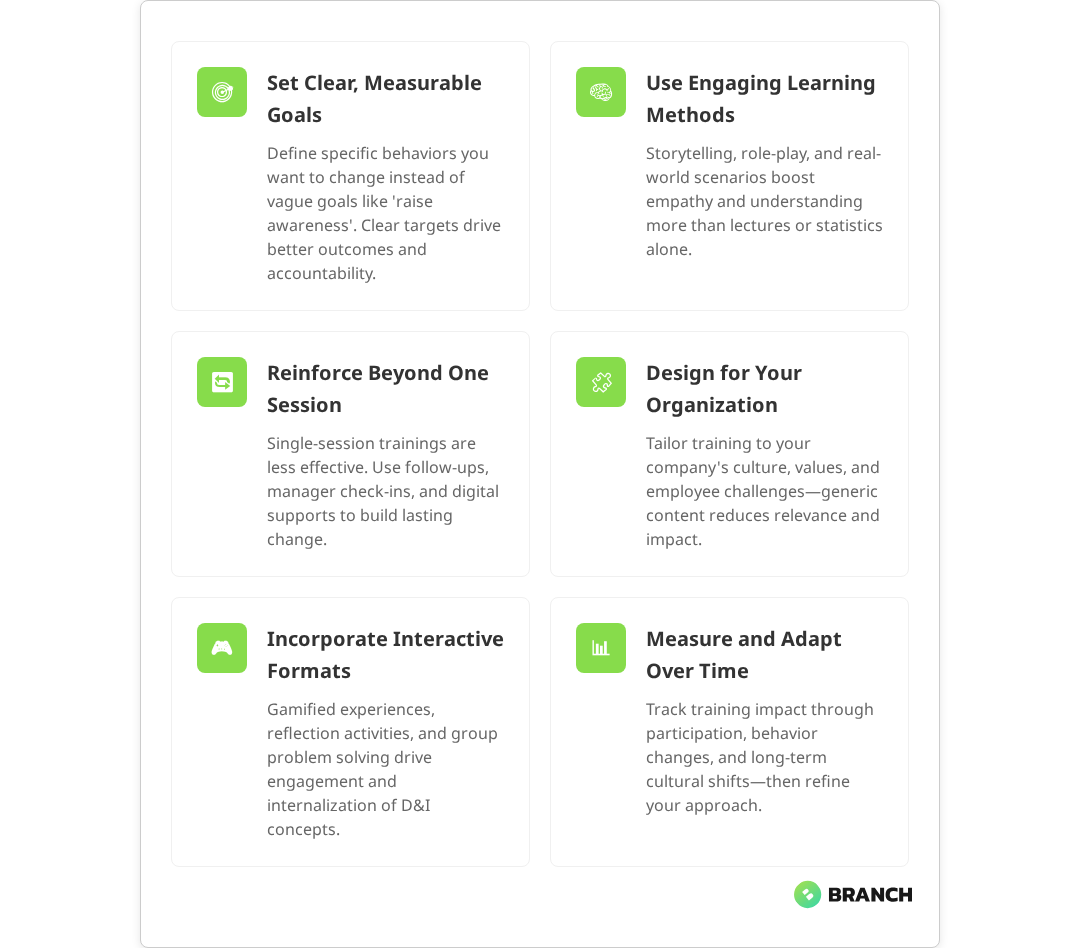
The Science of Engagement in D&I Training
Effective diversity and inclusion training leverages how adults actually learn. Research consistently shows that interactive, story-driven experiences create stronger retention and behavior change than traditional lecture formats.
The key is moving from telling people about diversity to helping them experience different perspectives. This might sound touchy-feely, but it’s grounded in solid learning science. Multiple studies demonstrate that when people actively engage with content—whether through problem-solving activities, personal reflection, or group discussions—they’re more likely to internalize and apply the concepts.
| Traditional Approach | Engagement-Focused Approach | Why It Works Better |
|---|---|---|
| Statistics about workplace bias | Interactive scenarios based on real situations | Participants practice applying concepts in context |
| Definitions of microaggressions | Role-playing exercises with guided reflection | Builds empathy through perspective-taking |
| Company policies on inclusion | Case studies from your actual organization | Shows relevance to participants’ daily experience |
| Generic best practices | Team-specific action planning | Creates concrete next steps for behavior change |
What the research says
Evidence from systematic reviews and organizational studies reveals key insights about what makes diversity and inclusion training effective:
- Multi-session programs work better: Research shows that 85.7% of multi-session DEI trainings reported significant improvements in measured outcomes, compared to just 46.7% of single-session programs.
- Active engagement drives results: Interactive training that includes problem-solving, reflection, and group discussion significantly outperforms passive lecture formats in changing attitudes and behaviors.
- Timing and context matter: Training delivered when people are making actual decisions—like hiring or promotions—produces more behavioral change than standalone awareness sessions.
- Personal narratives create connection: Stories and real experiences help participants relate to abstract concepts and develop empathy more effectively than hypothetical scenarios.
- Evidence on mandatory training is mixed: While ensuring consistent messaging, required training can sometimes trigger resistance, especially when framed as compliance rather than skill development.
Interactive Formats That Actually Work
The most impactful D&I training sessions share one thing: participants are actively engaged, not just passively listening. Here are formats that consistently drive results:
Story-Driven Learning
Personal narratives make abstract concepts concrete. When team members share their own experiences—both positive and challenging—it creates authentic learning moments that resonate far more than hypothetical scenarios. Research shows that personal narratives increase relatability and emotional connection, enhancing empathy and perspective-taking. The key is creating safe spaces where people feel comfortable being vulnerable.
Problem-Solving Activities
Present real workplace challenges and have teams work through solutions together. This might involve analyzing communication breakdowns, designing more inclusive meeting practices, or troubleshooting bias in hiring processes. Evidence demonstrates that collaborative problem-solving builds both skills and buy-in while increasing motivation and ownership of outcomes through active participation.
Gamified Learning Experiences
Games and simulations can make difficult topics more approachable. Custom trivia about your company’s diversity initiatives, inequality-focused board games, or digital simulations that let people experience different perspectives can all be powerful learning tools when thoughtfully designed.
Activity-Based Sessions
Short, focused activities often outperform lengthy presentations. A well-designed 30-minute exercise that highlights communication differences can create more “aha” moments than an hour of slides. The key is choosing activities that connect directly to your learning objectives.
Designing for Your Context
Effective diversity and inclusion training starts long before you create the first slide or activity. The foundation is understanding your specific organizational context, audience, and goals.
Know Your Audience
Demographics matter, but culture matters more. A startup with 30 employees needs different approaches than a Fortune 500 company with global teams. Consider:
- Current diversity representation and inclusion challenges
- Existing company values and how D&I connects to them
- Previous training experiences (what worked, what didn’t)
- Leadership support and messaging around D&I initiatives
- Time constraints and competing priorities
Set Clear, Measurable Goals
Vague objectives lead to vague outcomes. Instead of aiming to “increase awareness,” define specific behaviors you want to see change. Research emphasizes that measurable, specific goals are essential for tracking progress and determining program effectiveness. Examples might include:
- Improved participation from underrepresented team members in meetings
- Reduced bias in hiring and promotion decisions
- Increased psychological safety scores in team surveys
- Better conflict resolution around cultural differences
Building Content That Sticks
The best diversity and inclusion training doesn’t just inform—it transforms. This requires thoughtful content design that balances education with application.
Start With Self-Reflection
Before diving into group activities, give participants time to examine their own experiences and assumptions. Self-awareness is the foundation of inclusive behavior, and rushing past it undermines everything that follows. Studies show that DEI training incorporating self-reflection promotes lasting change more effectively than programs that skip this critical step.
Use Real Examples
Draw from your organization’s actual challenges and successes. If your company struggled with inclusive leadership during rapid growth, build scenarios around that experience. If certain teams have found innovative ways to collaborate across differences, showcase those practices. Research demonstrates that training grounded in practical, real-world scenarios leads to more meaningful behavior change and improved outcomes.
Make It Actionable
Every session should end with specific next steps. This might be individual commitments, team agreements, or organizational process changes. Without clear action items, even the most engaging training becomes just an interesting conversation.
Build in Reinforcement
One-and-done training rarely creates lasting change. Plan for follow-up sessions, peer coaching, manager check-ins, or digital reinforcement tools that keep D&I concepts front of mind.
Delivery Options and Trade-offs
How you deliver your diversity and inclusion training affects both engagement and outcomes. Each format has strengths and limitations:
| Delivery Method | Best For | Considerations |
|---|---|---|
| In-person workshops | Deep discussion, team building, sensitive topics | Higher cost, scheduling complexity, geographic limitations |
| Virtual sessions | Distributed teams, consistent messaging, cost efficiency | Engagement challenges, technical barriers, screen fatigue |
| Self-paced eLearning | Individual reflection, flexible scheduling, scalability | Lower engagement, reduced discussion, isolation |
| Blended approach | Combining individual prep with group application | Design complexity, multiple platforms, coordination needs |
The most effective programs often combine multiple delivery methods, using each format’s strengths to reinforce key messages and skills.
Read more about integrating D&I concepts into structured employee onboarding workflows.Measuring Impact and Iteration
Creating effective diversity and inclusion training is an iterative process. What works for one organization—or even one team—may need adjustment for another context.
Leading Indicators
Track engagement metrics during training: participation rates, question frequency, activity completion, and immediate feedback scores. These tell you whether your content is connecting.
Behavioral Changes
The real test is whether behavior changes after training. This might include manager observations, peer feedback, inclusion survey results, or analysis of meeting participation patterns.
Long-term Outcomes
Ultimate success shows up in retention rates, promotion patterns, employee engagement scores, and the overall health of your workplace culture. These metrics take time but provide the clearest picture of training effectiveness.
When to Partner With Specialists
Many organizations start diversity and inclusion training with internal resources—HR teams, learning and development staff, or external consultants. This can work well, especially for foundational concepts and company-specific content.
However, creating truly engaging, behavior-changing D&I programs requires specialized expertise in instructional design, adult learning principles, and inclusive content creation. Consider partnering with specialists when:
- Your internal team lacks eLearning development experience
- You need interactive, multimedia content that goes beyond slides
- Previous training attempts haven’t driven desired behavior changes
- You’re scaling programs across multiple locations or business units
- Leadership wants measurable ROI from D&I investments
The right development partner brings both technical expertise and fresh perspective, helping you avoid common pitfalls while creating programs tailored to your organization’s unique needs. Look for teams that combine instructional design skills with deep understanding of diversity, equity, and inclusion principles.
A thoughtful approach to diversity and inclusion training can transform workplace culture, but only if it’s built on solid learning foundations and genuine commitment to change. The investment in getting it right—whether through internal development or external partnership—pays dividends in employee engagement, innovation, and organizational resilience.
FAQ
How long should diversity and inclusion training sessions be?
Effective D&I training often works better in shorter, focused sessions rather than day-long workshops. Consider 30-60 minute activities that allow for deep engagement without overwhelming participants. Multiple shorter sessions with time for reflection and practice between them typically drive better behavior change than single marathon sessions.
Should diversity training be mandatory or voluntary?
This depends on your organizational culture and goals. Mandatory training ensures everyone receives consistent messaging but can create resistance. Voluntary programs often see higher engagement but may miss people who most need the content. Many successful programs start voluntary and become part of standard professional development as they prove their value.
How do we handle resistance or pushback during D&I training?
Resistance often signals that people feel defensive or don't see personal relevance. Address this by focusing on business outcomes, using data to ground discussions, and creating safe spaces for questions and concerns. Frame D&I as skills development rather than correction, and acknowledge that these conversations can feel uncomfortable while remaining important.
What's the difference between diversity training and inclusion training?
Diversity training typically focuses on understanding differences and reducing bias, while inclusion training emphasizes behaviors that make everyone feel valued and able to contribute. The most effective programs address both, helping people recognize differences AND develop skills to create environments where everyone can thrive.
How much should we budget for effective D&I training?
Costs vary widely based on scope, delivery method, and customization level. Basic online modules might cost a few thousand dollars, while comprehensive custom programs can require tens of thousands. Consider the cost of not addressing D&I issues—turnover, reduced innovation, legal risks—when evaluating your investment. Most organizations find that thoughtful D&I training pays for itself through improved retention and engagement.