
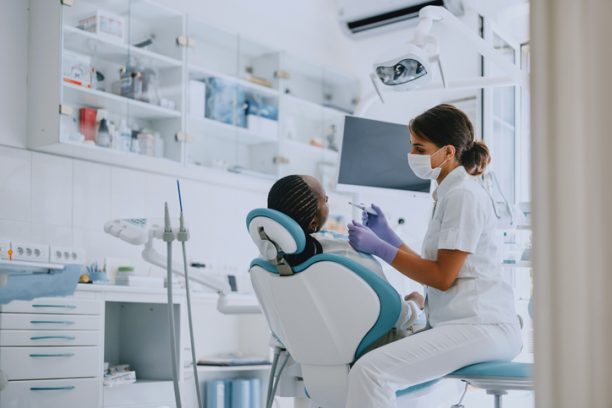

Most dental practices spend between $1,000 and $5,000 per month on marketing, and a good chunk of that money gets wasted. The average cost to bring in a single new patient sits between $150 and $300, which means every dollar you spend on the wrong channel is a dollar you could have spent on a channel that actually fills chairs.[1]
The dental industry is more competitive than it was five years ago. There are roughly 200,000 practicing dentists in the United States, and patients have more choices than ever. Over 70% of consumers now research dental treatments online before picking a provider, and 113,000 people search “dentist near me” on Google every single day.[2] If your practice doesn’t show up when those searches happen, someone else’s does.
What follows are the ten marketing strategies that consistently deliver the best return for dental practices, ranked by their actual impact on patient acquisition. Some of these are free. Some cost money. All of them work better when you understand why they work, not just how to set them up.
1. Local SEO and Google Business Profile optimization
This is the single most important marketing investment a dental practice can make, and it costs nothing to get started. When someone searches “dentist near me” or “emergency dentist [city name],” Google shows a map pack with three local results before any organic listings. If you’re not in that map pack, you’re invisible to the majority of potential patients in your area.
Your Google Business Profile is the foundation. Claim it, verify it, and fill out every field completely. That means your exact business name (no keyword stuffing), your correct address, your phone number, your hours, your website URL, the services you offer, and high quality photos of your office. Google uses this information to decide whether to show your practice when someone nearby searches for dental services.[3]
The practices that consistently rank in the map pack tend to do a few things well. They keep their information accurate and updated. They post regularly to their Google Business Profile, which signals to Google that the listing is active. They collect reviews consistently (more on that in a moment). And they make sure their name, address, and phone number are identical across every directory where they’re listed, from Yelp to Healthgrades to the local chamber of commerce website.
Local SEO also means optimizing your website for location specific keywords. Instead of trying to rank for “teeth whitening” nationally, target “teeth whitening in [your city]” or “cosmetic dentist [your neighborhood].” These searches have lower volume but much higher intent, and you can actually compete for them.
2. Online reputation management
Here’s a number that should get your attention: 98% of consumers read local reviews before choosing a business, and 77% of patients use online reviews as the first step in finding a new provider.[4] Your Google star rating is not a vanity metric. It directly affects whether patients call you or call the practice down the street.
The math on reviews is straightforward. Practices with more reviews and higher ratings rank higher in local search results. Google’s algorithm treats review volume and recency as ranking signals. A practice with 200 reviews averaging 4.8 stars will almost always outrank a practice with 15 reviews averaging 5.0 stars, because Google sees the larger sample as more trustworthy.
Building a review system doesn’t need to be complicated. Train your front desk team to ask satisfied patients for a review before they leave. Send a follow up text or email after appointments with a direct link to your Google review page. Make it as easy as possible. Most patients are happy to leave a review when asked, but they won’t think to do it on their own.
Responding to reviews matters too. Thank patients who leave positive reviews. For negative reviews, respond professionally and offer to resolve the issue offline. Practices that respond to all reviews are 88% more likely to be chosen by prospective patients compared to those that don’t respond at all.[5]Read more: A practical guide to digital marketing for healthcare organizations.
3. Website conversion optimization
Your website is where most of your marketing efforts eventually send people, so it needs to do one thing well: convert visitors into booked appointments. A lot of dental websites look nice but fail at this because they’re designed like brochures instead of conversion tools.
The average landing page conversion rate for dental offices is about 10%, which means 90% of people who visit your site leave without taking action.[6] That’s a lot of wasted traffic. Small changes to your website can make a measurable difference in how many visitors actually book.
Start with the basics. Your phone number should be clickable and visible on every page, especially on mobile. Your address should be easy to find. If you offer online booking (and you should, since 77% of patients prefer it), the booking button needs to be obvious and accessible from anywhere on the site. Don’t bury it three clicks deep in a submenu.
Page speed matters more than most practices realize. Half of all consumers expect a website to load in three seconds or less. If your site takes five or six seconds, you’re losing patients before they even see your homepage. Run your site through Google’s PageSpeed Insights tool and fix whatever it flags.
57% of dental practices plan to redesign their websites, which tells you that most practice owners already know their sites aren’t performing well enough.[7] If you’re in that group, focus the redesign on conversion elements rather than just aesthetics. A beautiful site that doesn’t generate appointments is an expensive business card.
4. Content marketing and dental SEO
SEO optimized content generates three times more leads than paid advertising for dental practices, and it compounds over time.[8] A blog post you write today about “what to expect during a root canal” can bring in patients for years without any additional spend. A Google Ad stops working the moment you stop paying for it.
The key is writing content that answers the questions your potential patients are actually asking. Over 70% of dental search queries are long tail keywords, meaning people aren’t just searching “dentist” but rather “how much do veneers cost” or “is it normal for gums to bleed when flossing.” When your website has a well written page that answers that specific question, Google sends those searchers to you.
Focus your content on the procedures and services that generate the most revenue for your practice. If dental implants are your highest margin service, write multiple pieces of content around implant related questions: cost, recovery time, candidacy, alternatives, what the procedure involves. Each piece targets a different search query and brings in a different segment of potential patients.
Don’t overthink the writing. You don’t need to sound like a medical journal. Write the way you’d explain something to a patient sitting in your chair. Clear, specific, and honest. If a procedure hurts, say it’s uncomfortable. If recovery takes two weeks, say two weeks. Patients trust content that doesn’t sound like a sales pitch.
5. Google Ads (PPC) campaigns
Paid search drives roughly 35% of dental website traffic, and it converts at a higher rate than organic search because the people clicking on ads tend to have immediate intent.[9] Someone searching “emergency dentist open now” and clicking an ad is much closer to booking than someone casually browsing a blog post about flossing techniques.
The challenge with dental PPC is that it’s gotten more expensive. Cost per click for dental keywords can range from $3 to $15 depending on your market, and competitive metro areas push that even higher. The average PPC conversion rate for dentists sits just under 2%, which means you need a lot of clicks before you get a booked appointment.[10]
To make PPC work without burning through your budget, focus on high intent keywords. “Emergency dentist [city],” “dental implants near me,” and “same day crowns [city]” are worth paying for because the people searching those terms are ready to act. Avoid broad keywords like “dentist” or “dental care” that attract clicks from people who aren’t looking for a provider.
Set up conversion tracking so you know exactly which keywords and ads are generating phone calls and appointment bookings, not just clicks. A campaign that generates 500 clicks and 2 appointments is performing very differently from one that generates 100 clicks and 8 appointments, even if the second one costs more per click.
6. Email marketing and patient retention
For every dollar spent on email marketing, businesses earn an average return of $44.[11] That’s not a typo. Email is the highest ROI marketing channel available, and most dental practices barely use it beyond automated appointment reminders.
The real value of email for dental practices is patient retention and reactivation. It costs significantly less to keep an existing patient than to acquire a new one, and patients in loyalty or membership programs spend about twice as much on treatment as other patients. Email is how you stay in front of patients between visits and bring back the ones who haven’t been in for a while.
Segment your email list based on patient behavior. Patients who haven’t visited in six months get a different message than patients who were in last week. Someone who had a consultation for implants but didn’t schedule the procedure gets a follow up sequence about implant benefits and financing options. Someone who just had a cleaning gets a thank you email and a reminder to schedule their next one.
Welcome emails have an average open rate of 82%, which makes the new patient welcome sequence your most valuable email asset.[12] Use it to introduce your practice, set expectations for their first visit, share helpful pre appointment information, and make them feel like they made the right choice.
7. Patient referral programs
According to dental marketing surveys, 77.5% of practices say referrals are their most effective marketing channel.[13] That’s not surprising. When a friend or family member recommends a dentist, the trust is already built before the patient ever walks through your door. The conversion rate on referrals is dramatically higher than any digital channel.
The problem is that most practices treat referrals as something that just happens passively. They don’t. Or rather, they happen at a fraction of the rate they could if you had a system in place. A structured referral program gives patients a reason and a reminder to recommend you.
Keep it simple. Offer a credit toward future treatment, a gift card, or a small incentive for every new patient referred. Make sure the referring patient and the new patient both benefit. Mention the program during checkout, include it in your email communications, and put referral cards in your waiting room. The practices that get the most referrals are the ones that ask for them consistently.
Track where your referrals come from so you can identify your best advocates. Some patients will refer five or ten people over the course of a year. Those patients deserve special recognition and should be treated accordingly.
8. Social media marketing
Let’s be honest about social media for dental practices: only 17% of dentists report acquiring patients directly through social media.[14] It’s not a strong direct acquisition channel. But that doesn’t mean it’s useless. Social media builds familiarity and trust over time, and 41% of patients say they consider social media when choosing a healthcare provider.
Facebook remains the dominant platform for dental practices, with 97% of dentists who use social media choosing it as their primary channel. That makes sense because Facebook’s demographics skew toward the age groups most likely to be making dental decisions for themselves and their families.
The content that works best on social media for dental practices is not promotional. Nobody wants to see “20% off whitening this month!” in their feed every week. What works is behind the scenes content that humanizes your practice: team introductions, office culture moments, patient transformations (with consent), and educational content about common dental questions. The goal is to make people feel comfortable with your practice before they ever call.
Post consistently but don’t obsess over frequency. Two or three quality posts per week is better than daily posts that feel forced. And don’t ignore comments and messages. Social media is a conversation, not a billboard.Read more: How to choose the right healthcare marketing agency for your organization.
9. Video marketing
Video is the format patients trust most when evaluating a dental practice they haven’t visited. A 60 second office tour, a quick explainer about what happens during a procedure, or a short introduction from the dentist can do more to build trust than a thousand words of website copy.
You don’t need a production crew. A smartphone, decent lighting, and a quiet room are enough to produce videos that perform well. The most effective dental videos tend to be straightforward and unpolished. Patients aren’t looking for Hollywood production values. They want to see the actual office, the actual team, and get a sense of what the experience will be like.
Post videos on your website, your Google Business Profile, YouTube, and social media. YouTube is the second largest search engine in the world, and dental procedure videos get significant search volume. A video titled “What to expect during a dental implant procedure” can rank in both YouTube and Google search results, giving you visibility in two places from a single piece of content.
Patient testimonial videos are particularly effective, though you need to be careful about consent and HIPAA compliance. Get written permission, keep the focus on the patient’s experience rather than specific medical details, and let the patient tell their story in their own words.
10. Mobile optimization and online booking
Over 60% of website traffic now comes from mobile devices, and 44% of patients who research healthcare providers on mobile end up scheduling an appointment.[15] If your website doesn’t work well on a phone, you’re losing nearly half your potential conversions before they start.
Mobile optimization goes beyond responsive design. Yes, your site needs to resize properly on smaller screens. But it also needs to load fast on cellular connections, have tap targets large enough for thumbs, and make the most important actions (calling, booking, getting directions) accessible within one tap from any page.
Online booking is no longer optional. 77% of patients prefer providers that offer online scheduling, yet only 26% of dental practices actually provide it.[16] That gap is an opportunity. If your competitors don’t offer online booking and you do, you’ll capture patients who want to schedule at 10 PM on a Tuesday when nobody is answering the phone.
The booking system should be integrated directly into your website, not a separate portal that requires patients to create an account and fill out ten forms. The fewer steps between “I want to book” and “appointment confirmed,” the more patients will complete the process.
When to bring in outside help
Some of these strategies are easy to handle in house. Asking patients for reviews, posting on social media, and sending emails don’t require specialized expertise. But others, like website development, SEO, PPC campaign management, and video production, often benefit from working with a team that does this full time.
The question isn’t whether to do marketing. It’s which parts you can do well yourself and which parts you should hand off. A good rule of thumb: if you’ve been “meaning to get to it” for six months and it still hasn’t happened, it’s probably time to talk to someone who can make it happen.
The American Dental Association recommends allocating roughly 4-5% of gross revenue to marketing efforts. For a practice generating $1 million annually, that’s $40,000 to $50,000 per year. The practices that spend that money strategically, tracking what works and cutting what doesn’t, tend to see a 3:1 to 5:1 return on their marketing investment.[17]
FAQ
How much should a dental practice spend on digital marketing?
Industry benchmarks suggest allocating 4-5% of gross revenue to marketing. For most practices, that translates to $1,000 to $10,000 per month depending on practice size and growth goals. Start with the highest ROI channels first, specifically local SEO and reputation management, then add paid channels as your budget allows. Track your cost per new patient acquisition to make sure you are getting a reasonable return.
What is the best marketing channel for a new dental practice?
Local SEO and Google Business Profile optimization should be your first priority. It is free to set up, it targets patients actively searching for a dentist in your area, and it compounds over time. Pair it with a review generation system from day one. For faster results while your SEO builds, Google Ads targeting high intent keywords like dentist near me and emergency dentist in your city can generate immediate patient flow.
How long does dental SEO take to show results?
Most dental practices start seeing measurable improvements in search rankings within three to six months of consistent SEO work. Competitive markets may take longer. The key is consistency. SEO is not a one time project but an ongoing effort. Practices that publish regular content, maintain their Google Business Profile, and build local citations steadily will see compounding returns over 12 to 24 months.
Should dental practices use social media for marketing?
Social media works best as a trust building and brand awareness channel rather than a direct patient acquisition tool. Only about 17% of dentists report getting patients directly from social media. That said, 41% of patients consider social media when choosing a provider, so having an active, professional presence on Facebook matters. Focus on educational and behind the scenes content rather than promotional posts.
How can dental practices measure their digital marketing ROI?
Track three numbers: cost per new patient acquisition, new patient volume by source, and patient lifetime value. Use call tracking to attribute phone calls to specific marketing channels. Set up conversion tracking on your website for online bookings. A good dental marketing ROI falls between 300-500%, meaning you earn $3 to $5 for every $1 spent. Review these numbers monthly and shift budget away from underperforming channels.